
Traveling With Diabetes After 60
What I Had to Learn the Hard Way Before Travel Got Easier
I used to be able to survive an entire road trip on gas station coffee, beef jerky, two donuts, and pure stubbornness.
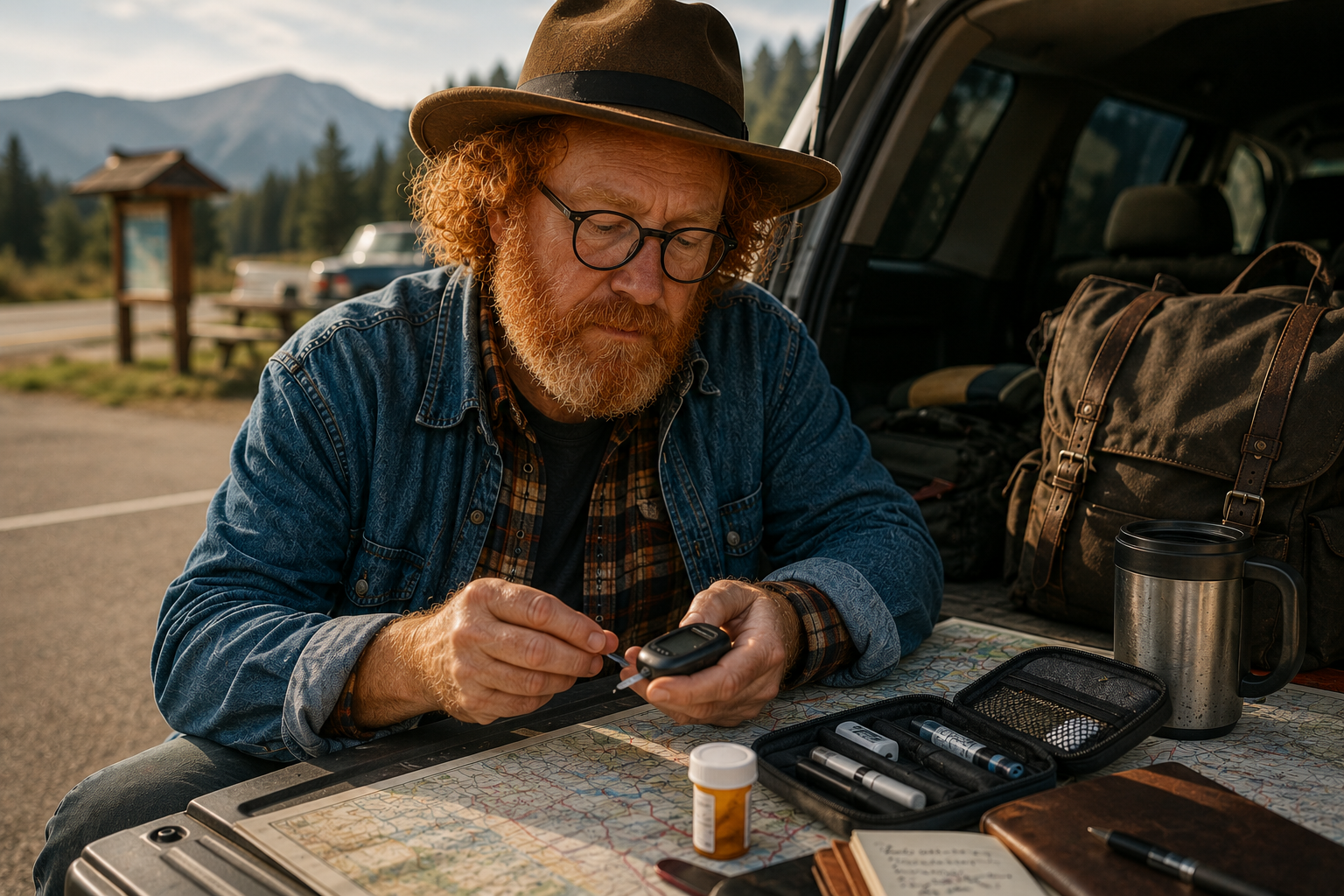
Honestly, I’m not even sure my body was functioning properly back then. I think it was just confused and too busy to complain.
Now?
Now my knees hold private meetings every morning before stairs. My back occasionally sends warning letters. And somewhere along the line diabetes joined the conversation like an unwanted travel companion who refuses to sit quietly in the backseat.
Aging is funny that way.
One day you’re driving twelve hours straight while eating barbecue potato chips out of a crumpled bag on your lap, and the next day your glucose meter is basically acting like a disappointed school principal.
Life comes at you fast.
Or slower.
Actually much slower after sixty.
Especially in the morning.
The thing nobody really tells you about traveling with diabetes after sixty is this:
It’s not usually one big dramatic problem.
It’s a hundred tiny little things.
The missed meals.
The extra walking.
The sitting too long in the car.
The giant cinnamon roll calling your name from a roadside diner in Indiana like some sugary lighthouse of bad decisions.
And listen… I’m not sitting here pretending I became some perfect health guru because that absolutely did not happen.
I still like pie.
I still stare too long at bakery cases.
And if a small-town diner serves homemade hash browns crispy enough to qualify as structural lumber, there’s a good chance I’m ordering them.
You just learn balance differently after a while.
That’s the real story.
I remember one road trip a few years back where I thought I had everything figured out. I packed snacks. Took my medications. Brought water bottles. Felt responsible. Mature even.
That should’ve been my first warning sign right there.
About four hours into the drive, I started feeling off. Not sick exactly. Just… strange. Tired in a weird way. Foggy. Irritated.
You know that feeling where every little thing suddenly becomes annoying?
The radio’s too loud.
The seat feels crooked.
The guy in front of you is apparently the slowest human ever issued a driver’s license.
That feeling.
So I pulled into a rest stop thinking maybe I just needed coffee.
Turns out what I actually needed was food that wasn’t peanut butter crackers and caffeine.
See, diabetes doesn’t always arrive with dramatic movie music. Sometimes it just quietly turns you into a grouchy old raccoon wandering around a vending machine at noon.
And travel makes routines fall apart fast.
At home, you know your rhythm.
You know when breakfast happens. You know where the decent food is. You know which chair helps your back and which grocery store sells the bread that doesn’t taste like recycled cardboard pretending to be healthy.
Travel strips all that away.
Suddenly lunch happens at 3:30 because construction traffic backed up twenty miles outside Chicago. Dinner becomes whatever’s available at the nearest exit. Your sleep gets weird. Your body gets confused.
And older bodies hate confusion.
Mine certainly does.
That’s one thing I’ve learned after sixty: the margin for nonsense gets smaller every year.
You can still have adventures.
You just can’t treat yourself like a shopping cart with legs anymore.
Hydration became a bigger deal too.
I used to laugh when people carried giant water bottles everywhere. Thought it looked excessive.
Now I travel with enough water to survive minor desert conditions.
Because dehydration sneaks up on you fast during travel. Air conditioning dries you out. Coffee dries you out. Long stretches in the car dry you out. And diabetes already likes to play games with energy levels in the first place.
Half the battle is simply paying attention before things go sideways.
That part took me longer to learn than I care to admit.
The food situation gets interesting too.
You ever notice how road trip food choices are either:
- Deep fried
- Covered in sugar
- Wrapped in cheese
- All three at once
Travel plazas act like vegetables are illegal.
And don’t even get me started on “healthy muffins.” Those things are basically birthday cake wearing hiking boots.
But here’s what surprised me.
I stopped trying to eat perfectly.
That changed everything.
Because perfection lasts about six hours on the road before somebody puts fresh cinnamon rolls near the cash register and your willpower dies in broad daylight.
What works better is realism.
Eggs instead of pancakes sometimes.
Turkey sandwich instead of fried chicken sometimes.
Splitting fries instead of pretending you don’t want them.
Small decisions.
Repeated often.
That’s usually the game.
And walking helps more than people realize.
Not marathon walking either.
Nobody’s asking you to climb the Rocky Mountains while wearing compression socks and carrying almonds in a backpack.
I mean simple movement.
Parking farther away. Walking around the rest stop. Exploring small towns instead of just photographing the welcome sign and leaving immediately.
Funny thing is… walking became one of my favorite parts of traveling after sixty.
Not because I suddenly became athletic.
Absolutely not.
But because slowing down makes you notice things.
Old brick buildings.
Little bookstores.
Conversations with strangers.
The smell of coffee drifting out of diners at seven in the morning.
You stop racing through places and start actually seeing them.
Diabetes forced some of that on me, honestly.
And weirdly enough… I think my life got a little better because of it.
Not easier.
Just more intentional.
There’s still frustration sometimes.
Travel fatigue is real after sixty. Diabetes adds another layer to it. Some days your energy disappears for no obvious reason. Some mornings your blood sugar acts like it’s making decisions based on astrology instead of science.
Very rude behavior from a pancreas, frankly.
But I’ve also learned something important.
You do not have to travel perfectly to enjoy your life.
That matters.
Because I think a lot of people over sixty quietly start getting scared after health problems show up. They think traveling is over unless every detail is controlled.
But most of us don’t need perfect trips.
We need manageable ones.
Comfortable ones.
Interesting ones.
Trips with decent coffee and fewer stairs.
Trips where we come home tired in the good way instead of the hospital way.
That’s the sweet spot.
These days when I pack for travel, the checklist looks a little different than it used to.
Medications.
Snacks that actually help.
Extra water.
Comfortable shoes.
Reading glasses I’ll spend two days looking for even though they’re on my head.
The glamorous side of aging nobody talks about.
But honestly?
I still love the road.
Still love early morning diners.
Still love lake towns and roadside cafes and strange little antique shops that smell vaguely like dust and old fishing tackle.
Diabetes changed the way I travel.
It didn’t end it.
If anything, it taught me how to travel smarter. Slower. Better.
And these days that feels like a fair trade.