
Travel Fatigue Is Real: Here’s How I Avoid It
These Days I Don’t Bounce Back From Exhaustion Like I Used To… So I Finally Stopped Traveling Like I Was 35
.
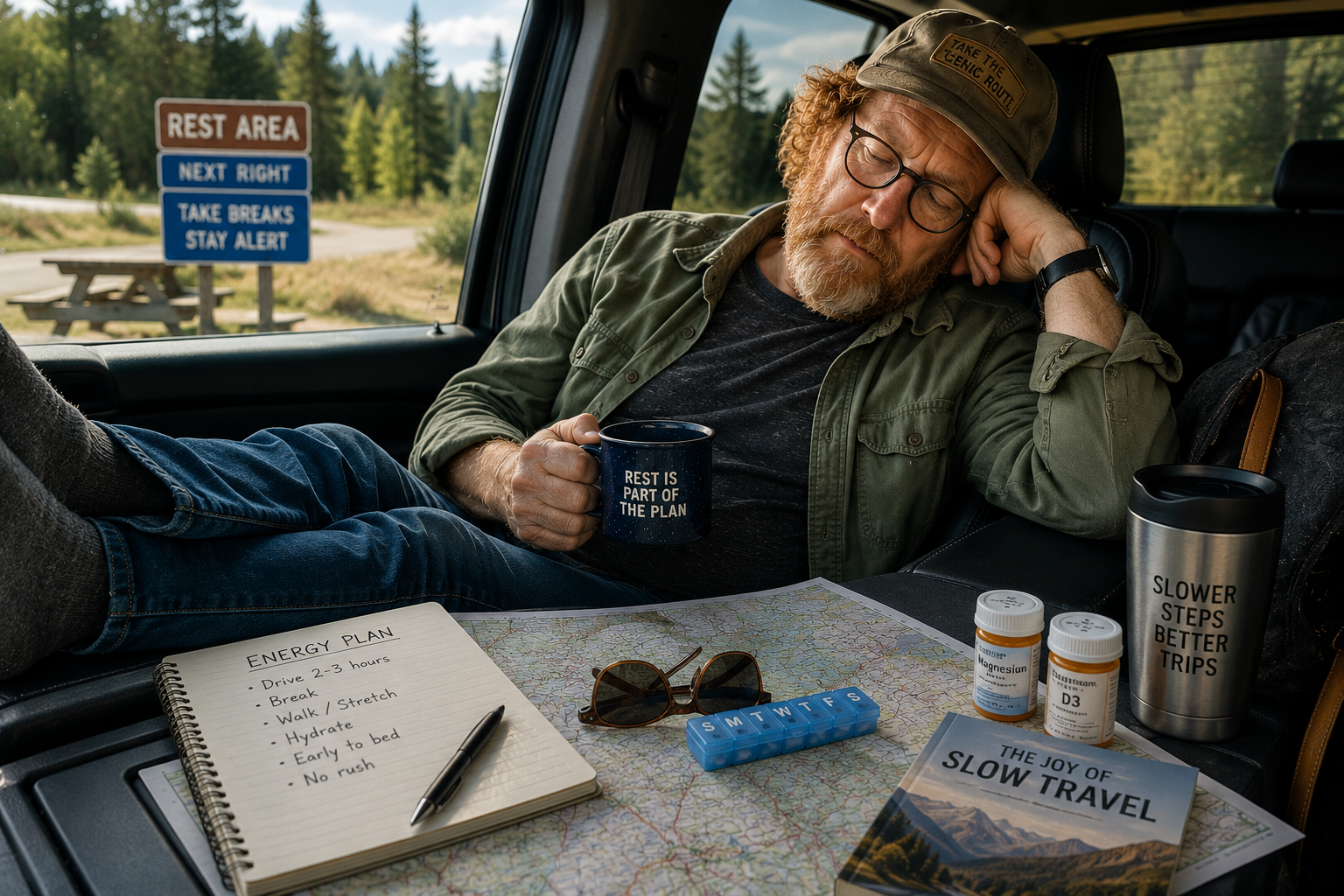
For years, I thought travel fatigue was something that happened to other people.
You know.
People who planned too much.
People who stayed up too late.
People who insisted on seeing seventeen attractions in one day because they had a spreadsheet and were determined to justify its existence.
Not me.
I was a road warrior.
A traveler.
An explorer.
A guy who could drive all day, sleep six hours, drink questionable coffee, and do it all again tomorrow.
Or so I thought.
Then one afternoon, somewhere around my sixtieth birthday—or maybe my sixty-first, the years start playing hide-and-seek after a while—I found myself sitting on a hotel bed staring at a beautiful waterfront town I’d been excited to visit for months.
And I didn’t want to do anything.
Not because the town was boring.
It wasn’t.
Not because the weather was bad.
It wasn’t.
I was simply exhausted.
Mentally.
Physically.
Emotionally.
The trip wasn’t the problem.
The pace was.
That was the day I realized travel fatigue is absolutely real.
And the older I get, the more important it becomes to prevent it.
The good news?
You don’t need to travel less.
You just need to travel smarter.
I Stopped Treating Vacations Like Endurance Competitions
This was the biggest change.
For years, I believed a successful trip meant maximizing every moment.
Breakfast at seven.
Museum at nine.
Scenic drive at eleven.
Lunch at noon.
Walking tour at two.
Dinner at six.
Collapse by nine.
Repeat.
Looking back, I wasn’t really enjoying those trips.
I was surviving them.
There’s a huge difference.
Now I focus on quality instead of quantity.
I’d rather truly enjoy three experiences than rush through ten.
Every time.
I Build Empty Space Into My Schedule
This sounds almost irresponsible.
At least it did the first time I tried it.
I intentionally leave blocks of unscheduled time.
Actual empty time.
No backup plans.
No alternate activities.
Nothing.
And do you know what usually happens?
Something wonderful.
I discover a bookstore.
A waterfront café.
A scenic trail.
A local market.
Or I simply sit and enjoy where I am.
Travel becomes more enjoyable when every minute doesn’t have a job.
I Stop Before I Feel Tired
This one took years to learn.
I used to rest when I became exhausted.
Now I rest before that happens.
Small difference.
Massive results.
If I’ve been walking for a while, I sit.
If I’ve been driving for hours, I stop.
If I’ve had a busy morning, I slow down during the afternoon.
The goal isn’t avoiding activity.
The goal is avoiding depletion.
Those are very different things.
Hydration Solves More Problems Than People Realize
I know.
This advice is about as exciting as a lecture on proper sock organization.
But it works.
Many symptoms people blame on travel are actually signs of mild dehydration.
Things like:
- Fatigue
- Headaches
- Low energy
- Brain fog
- Irritability
I’ve experienced all of them.
Usually while insisting I was perfectly fine.
Meanwhile my body was basically sending emergency telegrams requesting water.
Now I carry a water bottle almost everywhere.
Simple habit.
Big payoff.
I Sleep Like Sleep Actually Matters
Because it does.
A lot.
Sleep affects:
- Energy
- Mood
- Patience
- Focus
- Decision-making
Basically everything.
Yet travelers often sacrifice sleep first.
Late dinners.
Early tours.
Long drives.
Early flights.
After sixty, I’ve learned that protecting sleep improves the entire trip.
One extra hour of sleep often provides more value than one extra attraction.
Not always.
But often enough.
I Don’t Try to Keep Up With Younger Travelers
This one requires honesty.
And honesty can be annoying.
There comes a point where you realize you don’t need to match the pace of travelers thirty years younger than you.
Actually, you never needed to.
You simply thought you did.
I walk at my pace.
Rest when I want.
Take breaks when needed.
And you know what?
The world hasn’t complained once.
The harbor still looks beautiful.
The museum still opens on time.
The destination remains perfectly content to wait for me.
I Eat for Energy, Not Just Entertainment
Let’s talk about food.
Because travel and food are practically inseparable.
And that’s okay.
I still enjoy local specialties.
Still enjoy desserts.
Still enjoy pie.
Obviously.
But I also pay attention to how food affects my energy.
A giant meal in the middle of the day might taste wonderful.
It can also make me want a nap powerful enough to alter weather patterns.
Balance matters.
Especially on active travel days.
Driving Fatigue Sneaks Up on You
This deserves its own section.
Driving fatigue is sneaky.
You don’t always notice it immediately.
One minute you’re fine.
The next minute you’re staring at a highway sign wondering whether you’ve passed it already.
That’s not the time to push harder.
That’s the time to stop.
I now take road-trip breaks every couple of hours.
Walk around.
Stretch.
Drink water.
Move.
Five minutes can completely change how you feel.
Walking Helps Prevent Travel Fatigue
This sounds backwards.
Walking creates energy.
At least reasonable amounts of walking do.
When I spend too much time sitting:
- Driving
- Flying
- Waiting
- Riding
I actually feel more tired.
Movement helps.
Not marathon movement.
Normal movement.
Walking through a waterfront district.
Exploring a small town.
Taking a morning stroll.
Those activities keep both body and mind engaged.
I Schedule Recovery Days
This may be my favorite travel habit.
On longer trips, I intentionally schedule lighter days.
Days with no major attractions.
No long drives.
No complicated plans.
Maybe a leisurely breakfast.
A walk.
Some reading.
People-watching.
A harbor bench.
Recovery days help prevent burnout before it starts.
And they often become some of the most enjoyable days of the trip.
The Emotional Side of Travel Fatigue
Here’s something people don’t discuss enough.
Travel fatigue isn’t always physical.
Sometimes it’s mental.
Constant decisions.
New environments.
Navigation.
Schedules.
Planning.
All of that requires energy.
Eventually the brain gets tired too.
When that happens, I simplify.
Fewer decisions.
Fewer activities.
More breathing room.
The goal isn’t maximizing productivity.
It’s maximizing enjoyment.
The Older I Get, the More I Appreciate Balance
Balance used to sound boring.
Now it sounds brilliant.
Not too much activity.
Not too much rest.
Not too much food.
Not too much rushing.
Not too much planning.
Travel becomes more enjoyable when balance replaces intensity.
Funny how age teaches lessons we spent years ignoring.
What Travel Fatigue Actually Taught Me
The biggest lesson was this:
You don’t have to do everything.
You don’t even have to do most things.
You simply have to enjoy the things you choose to do.
That realization changed how I travel.
And honestly, it changed how I think about life too.
Otis’s Roadside Wisdom
If you’re tired, rest.
Not later.
Now.
The destination isn’t going anywhere.
Your enjoyment of it might.
Protect your energy.
It’s one of the most valuable things you pack.
Final Thoughts
Travel fatigue is real.
But it isn’t inevitable.
A little planning.
A little pacing.
A little self-awareness.
Those things go a long way.
Drink water.
Get sleep.
Move regularly.
Take breaks.
Leave room in your schedule.
Listen to your body before it starts shouting.
Because travel after sixty isn’t about proving how much you can do.
It’s about creating experiences you’ll actually enjoy and remember.
And trust me, the memories are much better when you’re awake enough to appreciate them.
The world will still be there tomorrow.
There’s no need to see it all today.